Over the Summer I participated in the Ancient Language Processing workshop in Varna. The workshop focuses on using computational linguistics to explore ancient language corpora.
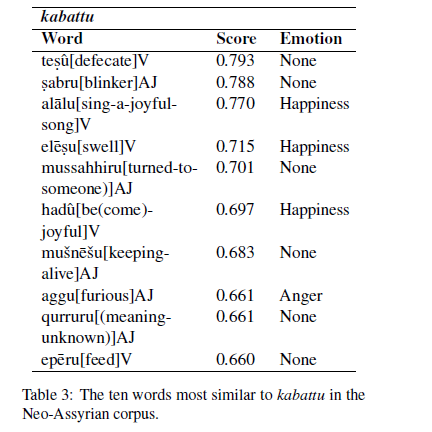
I wrote a paper with Aleksi Sahala where we used word embeddings to find words in a Neo-Assyrian corpus that had a similar usage profile to words relating to the body. The body words that had a usage profile similar to emotion words should share a semantic field.
We found that of the 22 body words we examined, only the word for ‘liver’ (kabattu) had a clear emotional field.
You can find the paper, as well as the others presented at the workshop, here.
I just had wonderful news that my article “Age and Masculinities during the Neo-Assyrian Period” has been published in the excellent Journal of Cuneiform Studies! You can see find it on their website.
In it, I give a brief overview of the sociological theories behind ageing, and how ancient Near Eastern scholars have studied age in our material. Then I explain the potential for digital methods like co-occurrences in a corpus have for this type of study. By seeing the patterns of how words were used on a big scale, you can get an idea of the major themes and phrases surrounding the word you’re interested in. So instead of imposing our modern ideas about ageing as a decline and a terrible thing, your starting point can begin with ideas suggested from the texts themselves.
I use co-occurrence networks and co-occurrence lists to inform my reading of the Neo-Assyrian texts, and focus on a group of words relating to youth and old age. I find that (naturally), young and old men were conceptualised differently, but also some nuances specific to certain words. Finally, I describe how the concepts of both young AND old men played into what Neo-Assyrians thought of as an ‘ideal man’.
If you’re interested in a copy, please send me an email.
I received wonderful news that my article “The Masculinities of the Neo-Assyrian “Queens of the Arabs” has been published in the Hebrew Studies journal.
You can see the contents of the special edition here at NAPH’s website.
This article means a lot to me, as it was the reason for my interest in masculinities studies. During the course of my PhD research, the one aspect of the “Queens of the Arabs” that kept nagging at me was how masculine they were. In many ways, they were unremarkable and indistinguishable from other non-Assyrian rulers in the ancient texts – except for being noted as women.
When I started my first postdoc at Helsinki one of my goals was to deal with this niggling question, so when I was invited to contribute to a special edition of Hebrew Studies dealing with questions of ancient gender, I thought this was the perfect opportunity to put the question to rest.
Due to copyright, I’ll make sure a copy of the article is available here and on my academia.edu page next year. In the meantime, you’re welcome to read the abstract below:
The “Queens of the Arabs” are a unique group of women whose actions are only recorded in the sources of the Neo-Assyrian empire. They ruled in many of the same ways as other foreign male kings did: they led military campaigns, and were in control of their people’s assets. In a very real sense these women acted in a masculine manner. In this contribution, I will explain how hegemonic masculinities theory can provide nuance to a gendered reading of these women. I will then demonstrate how the “Queens of the Arabs” conformed to Assyrian ideals for foreign masculinities. Finally, I will discuss how the scribes and artists tasked with recording the actions of these women used motifs in their repertoires for both men and women to depict these masculine women in reliefs and texts.
Bennett 2022, abstract
I’m always happy to chat about my work, so if you have any questions, please send me an email at eleanor.bennett@helsinki.fi .
What does it mean to be a man? The answer to that might surprise you. In fact, different people will give different answers. The idea of what is ‘masculine’ is increasingly being shown to be based on cultural expectations, and the many cultures of ancient Western Asia were no different.
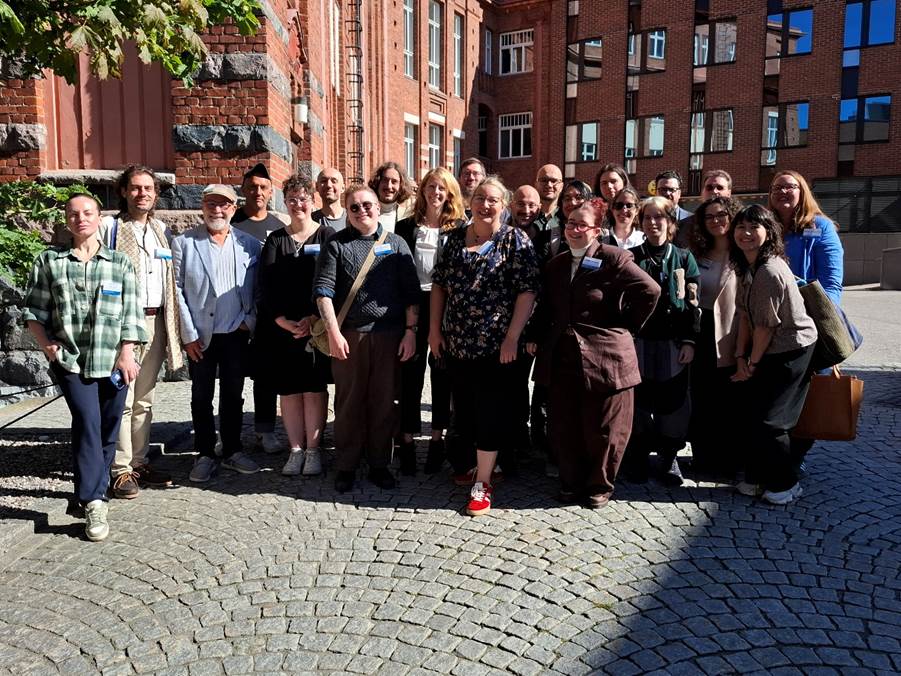
The in-person workshop participants. Photo by Lena Tambs.
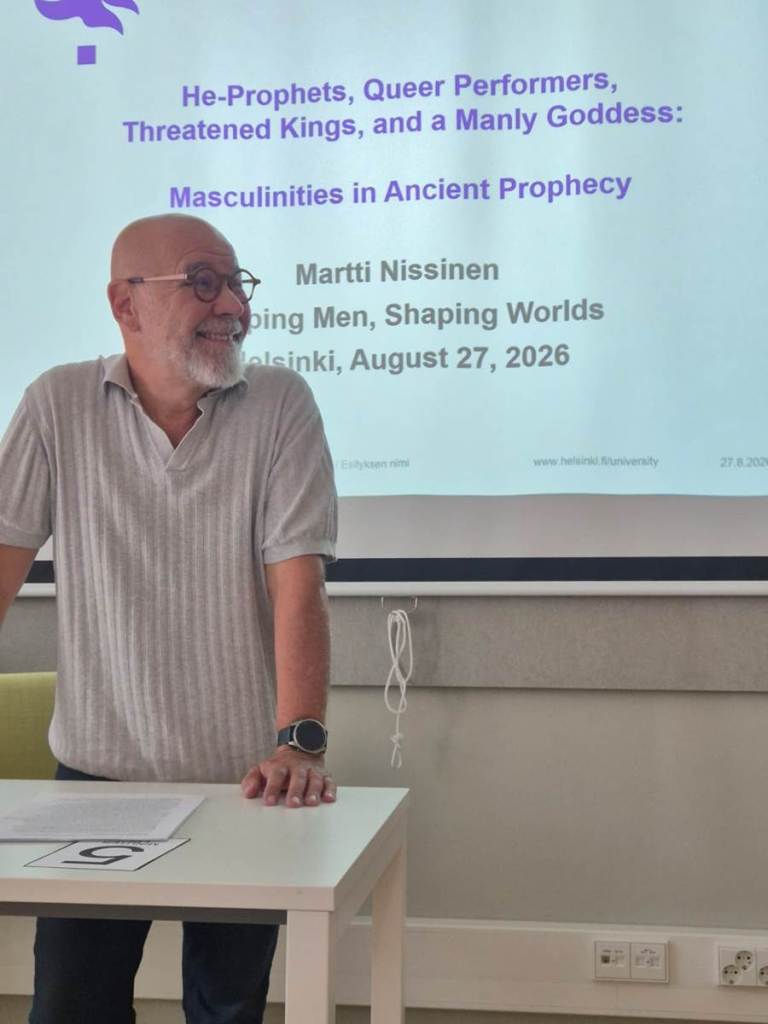
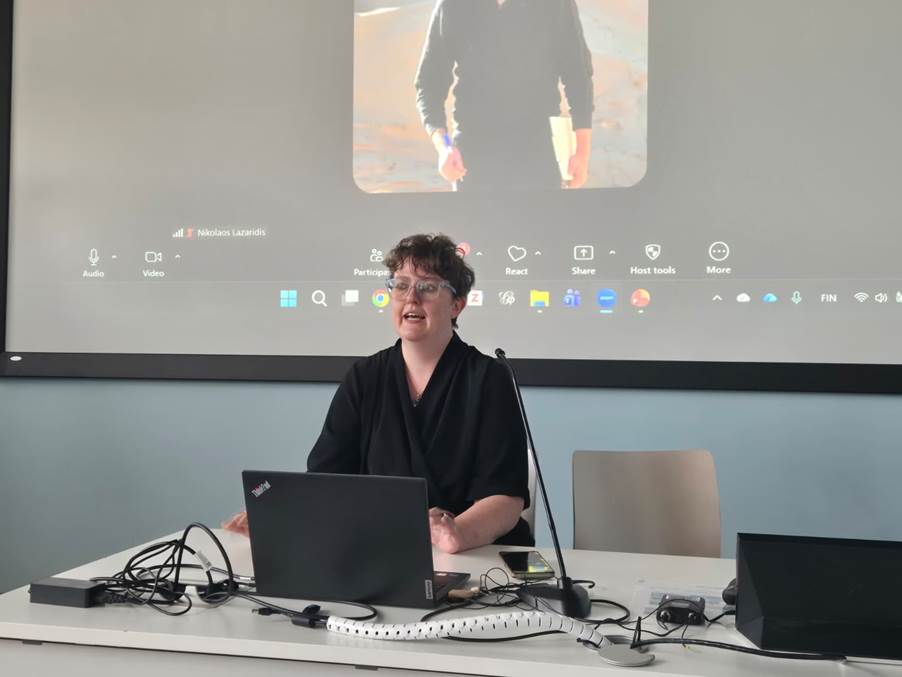
This question was at the heart of a workshop on 27th-28th August, titled Shaping Men, Shaping Worlds: Masculinities in Ancient Western Asia. The hybrid workshop included 20 papers, including a keynote from Professor Martti Nissinen (University of Helsinki). All questioned what it meant to be a man in Mesopotamian, Egyptian, and biblical sources.
Professor Martti Nissinen delivering his keynote.
The topics were diverse and included discussions on how inheritance practices determined survival in sieges (Uroš Matic); how hospitality practices were gendered (Anne Katrine de Hemmer Gudme); and how institutions could manipulate masculinities to ensure the king lived in moments of crisis (Kelsie Ehalt).
One theme permeated throughout the workshop: there was (and is) no single way to be a man. Different cultures had different ideas of what being a man meant. We even saw how the boundaries between modern ideas of a gender binary were blurred in ancient cultures. For example, Individuals could be depicted in images as women, but have male names in Achaemenid Egypt (Matheus Treuk). Masculinities were malleable, and changed depending on context, culture, and other aspects of identity.
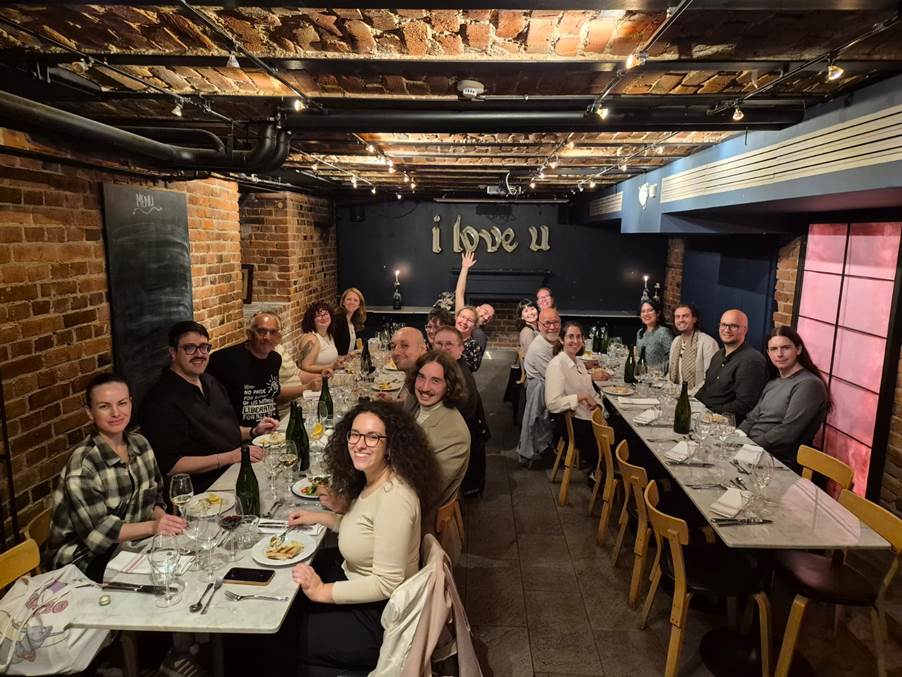
Workshop participants at dinner.
Shaping Men, Shaping Worlds was organised by Ellie Bennett (University of Helsinki) and Gioele Zisa (Sapienza University of Rome), with funding from the Centre of Excellence in Ancient Near Eastern Empires (ANEE), and supported by the Marie-Curie fellowship, University of Pennsylvania, and Sapienza University of Rome.
Shaping Men, Shaping Worlds follows in the footsteps of previous workshops, most notably Being A Man in 2014, the proceedings of which were then published by Ilona Zsolnay. However, since then the study of masculinities has been a niche field. In the largest gathering of scholars interested in ancient Western Asia gender, it is often included in panels about non-binary genders, or in panels with other themes. It was viewed as a niche field within a niche field.
The packed programme and 59 registered attendees for Shaping Men, Shaping Worlds makes one thing clear: the study of ancient Western Asia masculinities is no longer a niche field, and is only growing. Established scholars and PhD students alike are using masculinities as a key theoretical lens for their research. The registrations from as far afield as Canada, Japan, and Ghana show interest in ancient masculinities is important for scholars globally. Not only has interest in ancient Western Asian masculinities grown since 2014 and Being A Man, but it is now an established form of gender (and identity) analysis.
Ellie Bennett delivering closing remarks.
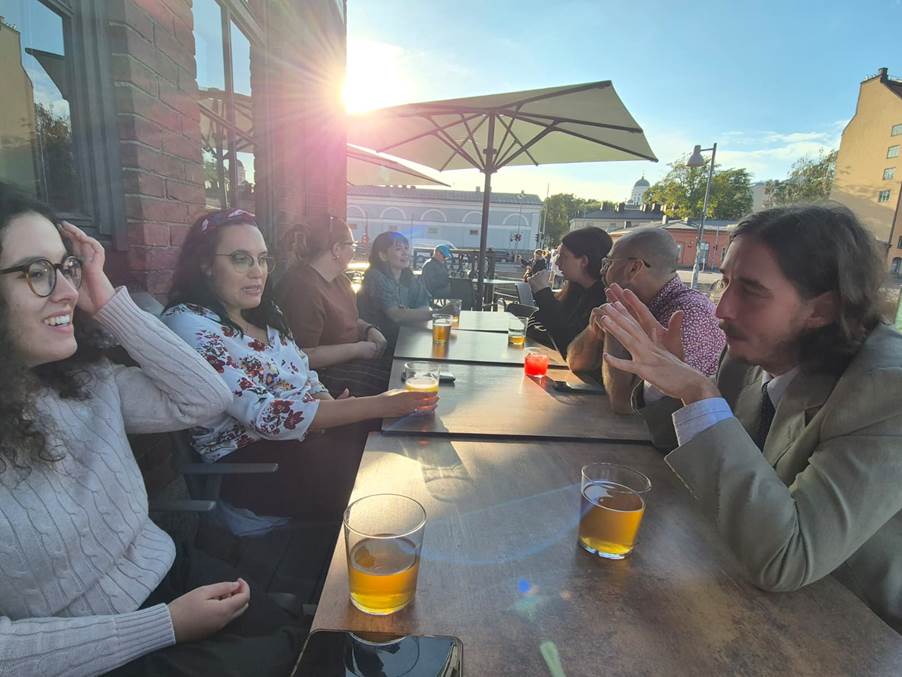
Participants discussing ideas over drinks.
Not only that, but there were instances where the unique material of ancient Western Asia challenged traditional theoretical models of masculinities. The complex dance of masculinities within a male monarchy in times of crisis (Omar N’Shea), and understanding notions of fatherhood (Patricia Bou Pérez), challenged the hegemonic masculinities model of Raewynn Connell and the model for female masculinities by Jack Halberstam. These challenges demonstrate the importance of examining ancient Western Asia masculinities. The unique material force us to reconsider previously accepted models, and have the power to force us to re-evaluate how we understand ancient and modern masculinities.
In my closing remarks I wanted to remind everyone in the room and on Zoom the importance of workshops like these. The toxic influence of the manosphere is permeating throughout modern society an causing real harm and violence. To counter the narrative, I challenged everyone to shout from the rooftops about figures like intersex Hermaphroditus; about the homoerotic Ugaritic gods; about the romance of Gilgamesh and Enkidu. About the findings and results which couldn’t be included in this short bog post. The more we talk about these different forms of masculinities, the more we can counter the toxic narratives that are driving more and more men to violence.
Last week I had the pleasure of (finally) attending the ASOR Annual Meeting in Boston. I was invited by the lovely Ludovico Portuese to present a paper in his session called “Manners and Etiquette in the Ancient Near East”.
The session was on the last day, so I attended sessions on pastoral nomadism, the transition from the Neo-Assyrian to the Neo-Babylonian period, and digital history and archaeology beforehand.
The session itself was wonderful. Manners and etiquette is not my normal topic, but the session proved it was an important aspect to consider when assessing ancient documents.
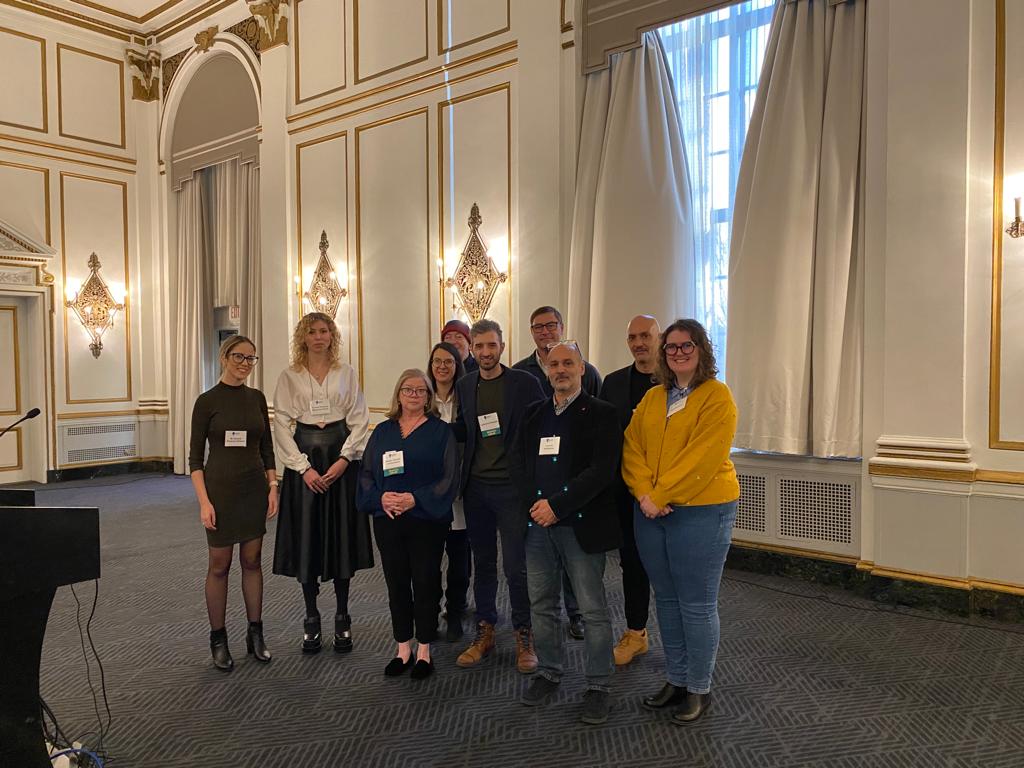
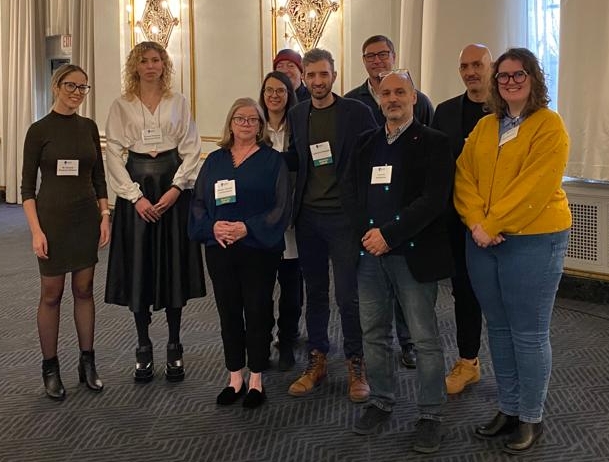
The participants of the “Manners and Etiquette in the Ancient Near East” session at ASOR. I’m on the far right in the yellow jumper.
My paper was about how we can see Assyrian etiquette in how the scribes and artists wrote about their interactions with the “Queens of the Arabs” Samsi and Adiye.
I’m looking forward to writing up my paper for the proceedings of the session.
The other fantastic aspect of ASOR was being able to meet and spend time with people I hadn’t seen in a long time. I also was able to meet up with the other editors of the proceedings for GeMANE 4 and 5, as well as someone else who I want to organise a session with for next year.
I think I had a fantastic first ASOR, and I don’t think I could have had a better first impression. I definitely want to attend next year.
This week I had the pleasure of participating as a teacher in the Digital Applications in Assyriology Summer School, hosted by Uppsala University, in collaboration with ANEE at the University of Helsinki.
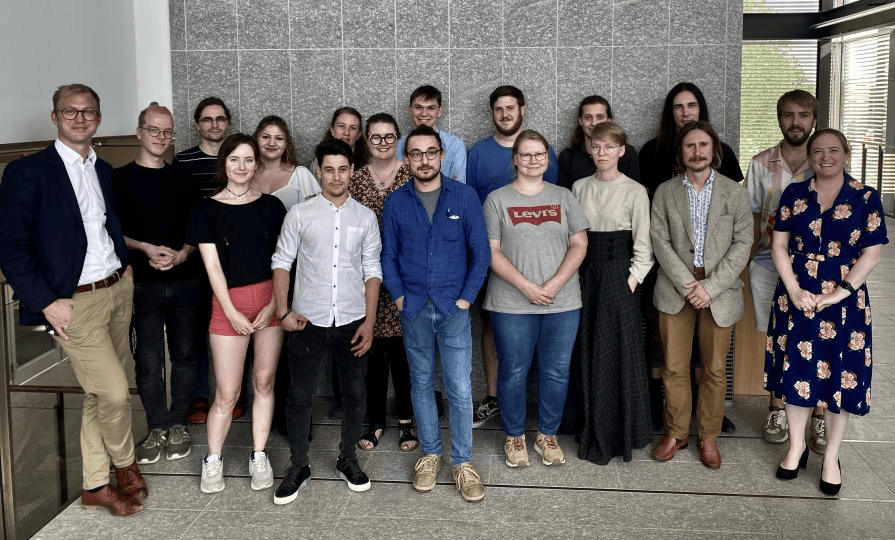
The staff and students of DAA 2022
I was one of six teachers: Rune Rattenborg, Seraina Nett, Aleksi Sahala, Stefan Smith, and Lena Tambs. We had 12 students attend from all over Europe – France, Belgium, and Denmark were all represented!
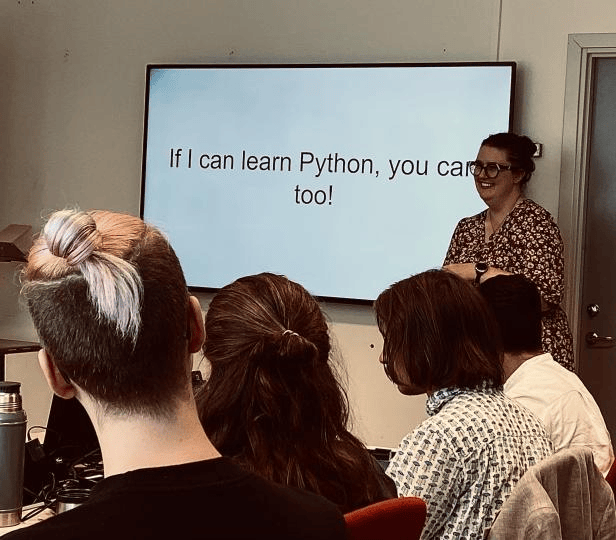
Me teaching Python
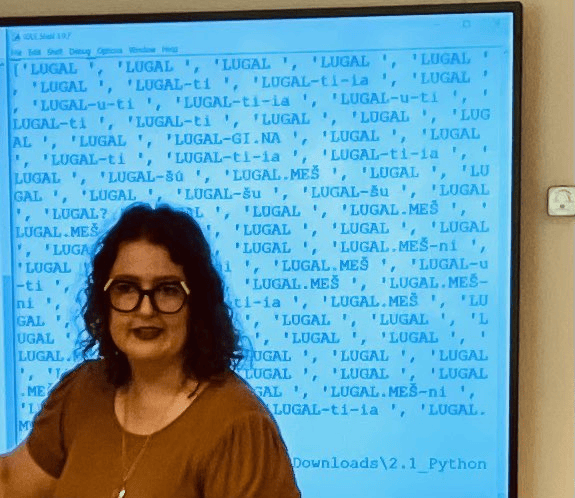
I was asked to give a Python 101 module, where I introduced the students to the programming language Python. Then I took them through a piece of code that opened a .txt file and did some simple statistical analysis.
I also gave a longer module where I introduced the Lexical Network Analysis method developed by ANEE in Helsinki. I gave a basic introduction to word co-occurrences, and Aleksi Sahala talked them through the basics of Pointwise Mutual Information. Then I walked the students through the workflow with a case study. I asked them to make and analyse networks to explore the semantic domain of animals in Neo-Assyrian texts.
The students now have a week to work on their assignments. They need to choose a small project that would use the applications they were introduced to during the week (html markup; Tableau; OpenRefine; Python; R; QGIS; Github; Gephi), and write up their methods.
My favourite photo of me telling the students my experiences with Python
I was so proud to hear that a third of the students wanted to use Python in their projects! Even better, at least two wanted to do some sort of lexical analysis of their data!
I had a wonderful time, and I’m so grateful for being invited to teach in a wonderful environment surrounded by excellent people. I hope this happens again next year, as I can only see this becoming more and more useful for future Assyriology students.
All photos were taken by Rune Rattenborg, and shared with permission.
Last week was the final stage in the Finnish PhD process: the Promootio.
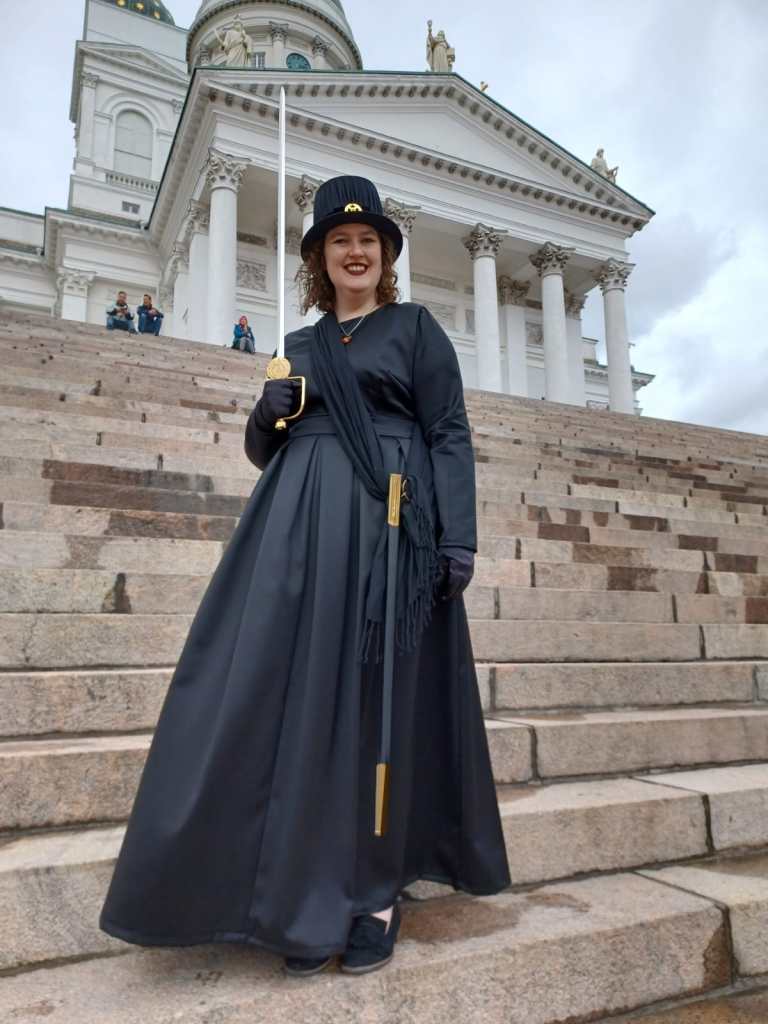
The event is held over several days, and is when the Masters and Doctors of Finnish universities receive their insignia. For Masters, this is a laurel wreath and a gold ring. For Doctors, it’s a top hat and sword.
After the event, at Senaatintori, with my top hat and sword
If you want, you can watch the whole two-and-a-half-hour event on youtube:
The insignia won’t be used very often, but it was amazing to take part in such an old aspect of Finnish culture.
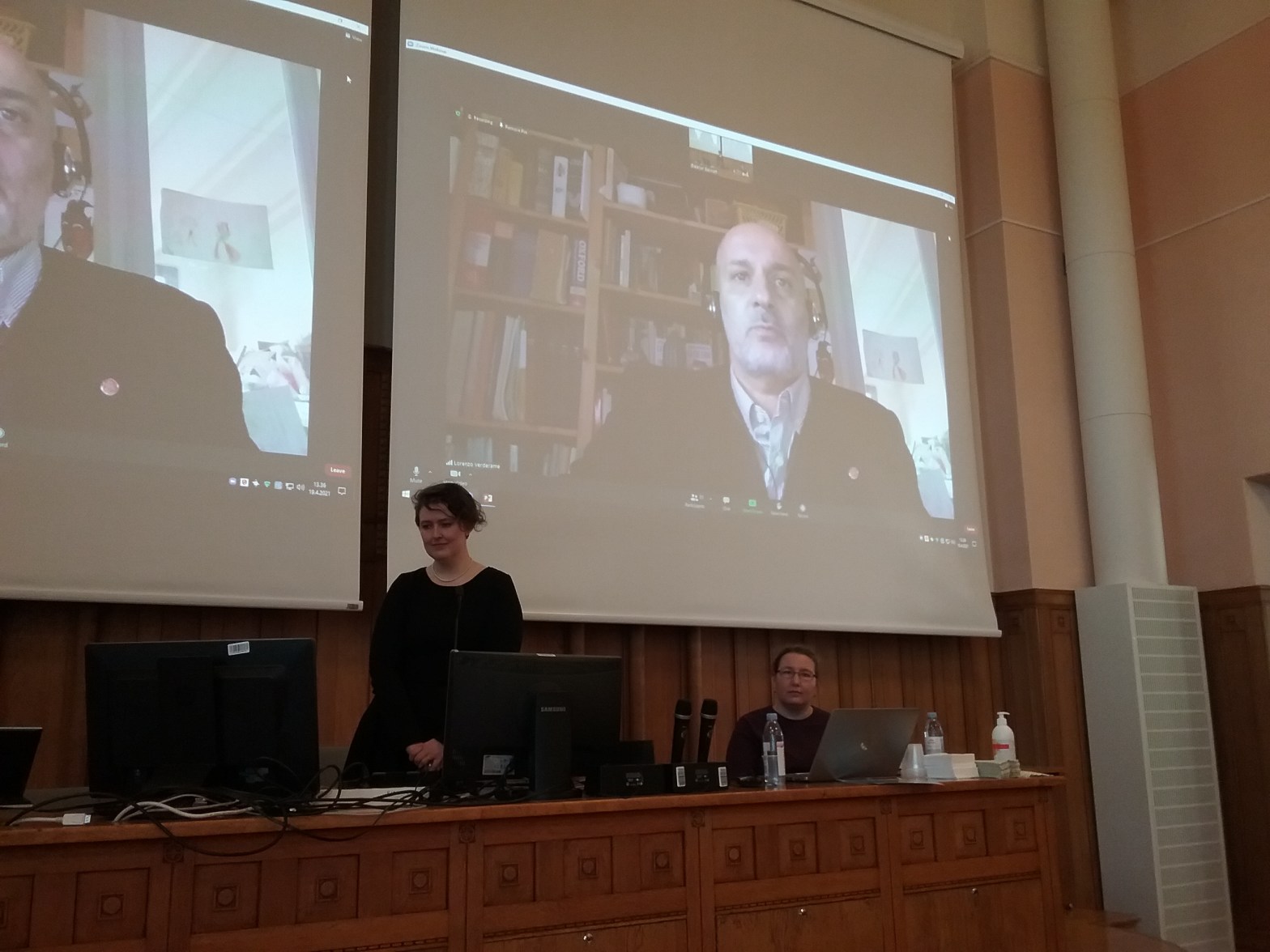
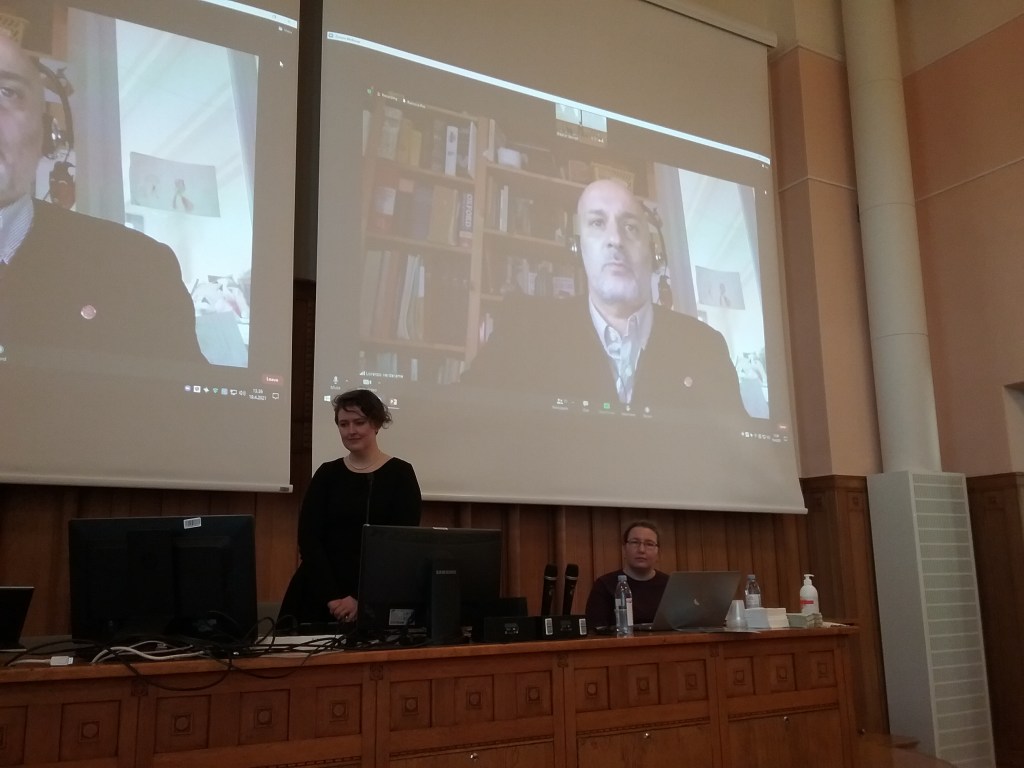
Me listening to the statement from Professor Verderame, and Saana Svard as Custos.
Yesterday I passed my thesis defence at the University of Helsinki. As part of the proceedings, I had to present a lectio praecursoria. This was a 20 minute presentation about my dissertation, titled ‘The “Queens of the Arabs” During the Neo-Assyrian Period’ (and is available to download).
The opponent was Professor Lorenzo Verderame, and after my presentation he gave a glowing statement about my research. Then was a really nice discussion about the process behind my decisions, as well as some interesting suggestions for future research.
After this discussion Professor Verderame recommended that my dissertation be accepted by the Faculty. In the Finnish system, this is when I passed the oral examination.
I’m very proud of myself, and I’m proud of the work I produced. But I’m blown away by the support I’ve had here in Helsinki, and the support of my family.
Here’s to the start of an equally successful career!
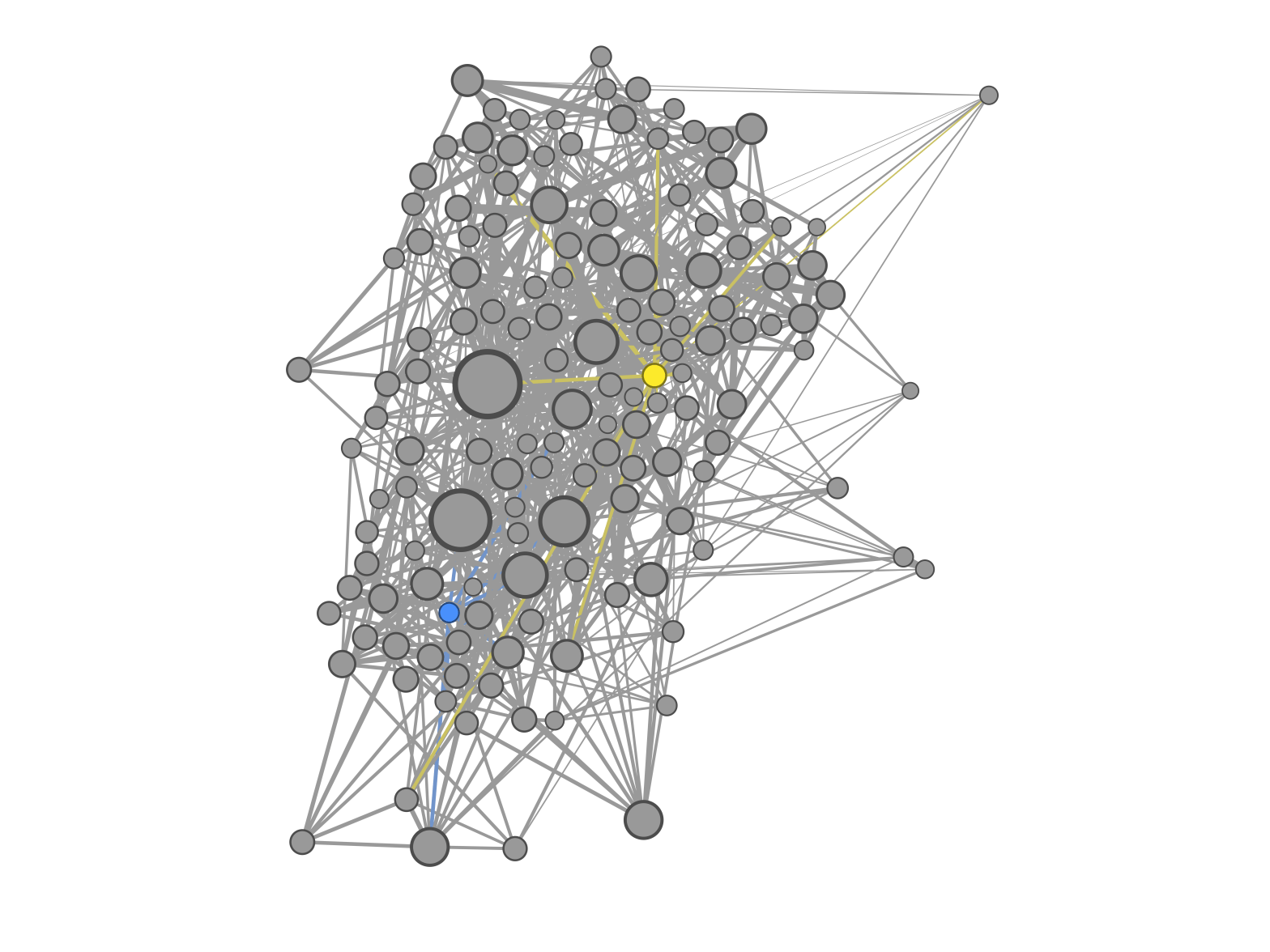
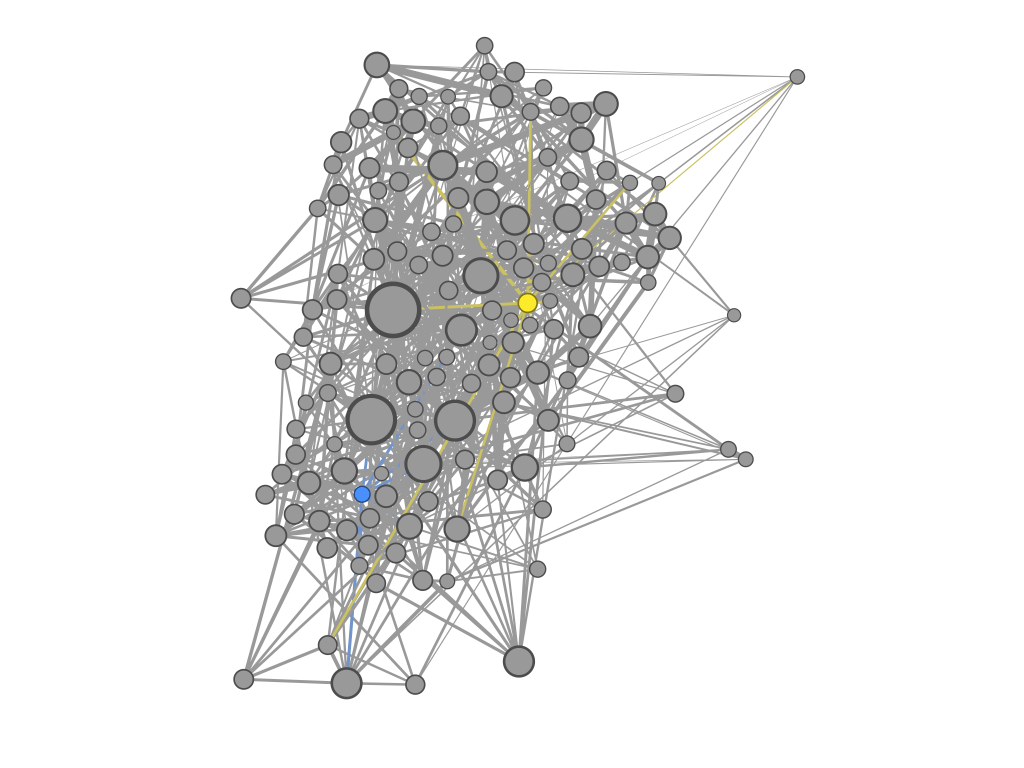
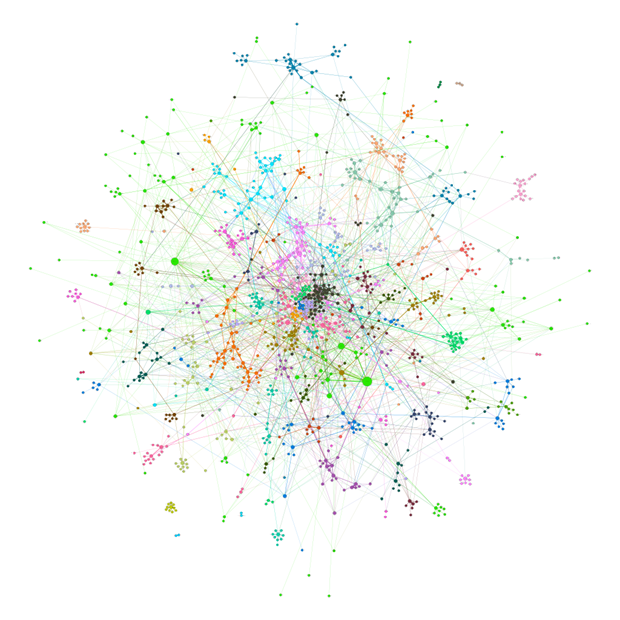
Global graph from Gephi. It shows a network made up of words about masculinities, and the words they are likely to occur with within a random 20-word window in a Neo-Assyrian text.
On the 8th of October I presented my most recent research regarding masculinities during the Neo-Assyrian period.
I have been using the techniques developed by the Semantic Domains team in ANEE to investigate the wider meanings behind masculinities. This has meant using probability measurements to measure how likely two words would occur together in a specific window of text, and then visualising the results to make analysis easier for the human researcher.
The results are preliminary, but I was able to identify some interesting ‘topographical’ patterns. More importantly, I was able to identify some traits of masculinities alluded to by archery equipment. These traits were both those which were the ‘ideal’ in Neo-Assyrian society, and traits which were not desirable for a man to attain.
This method has proven to be promising, and I hope I will also be able to explore how masculinity intersected with other aspects of identity using this method.
You can watch the recording of the presentation here: