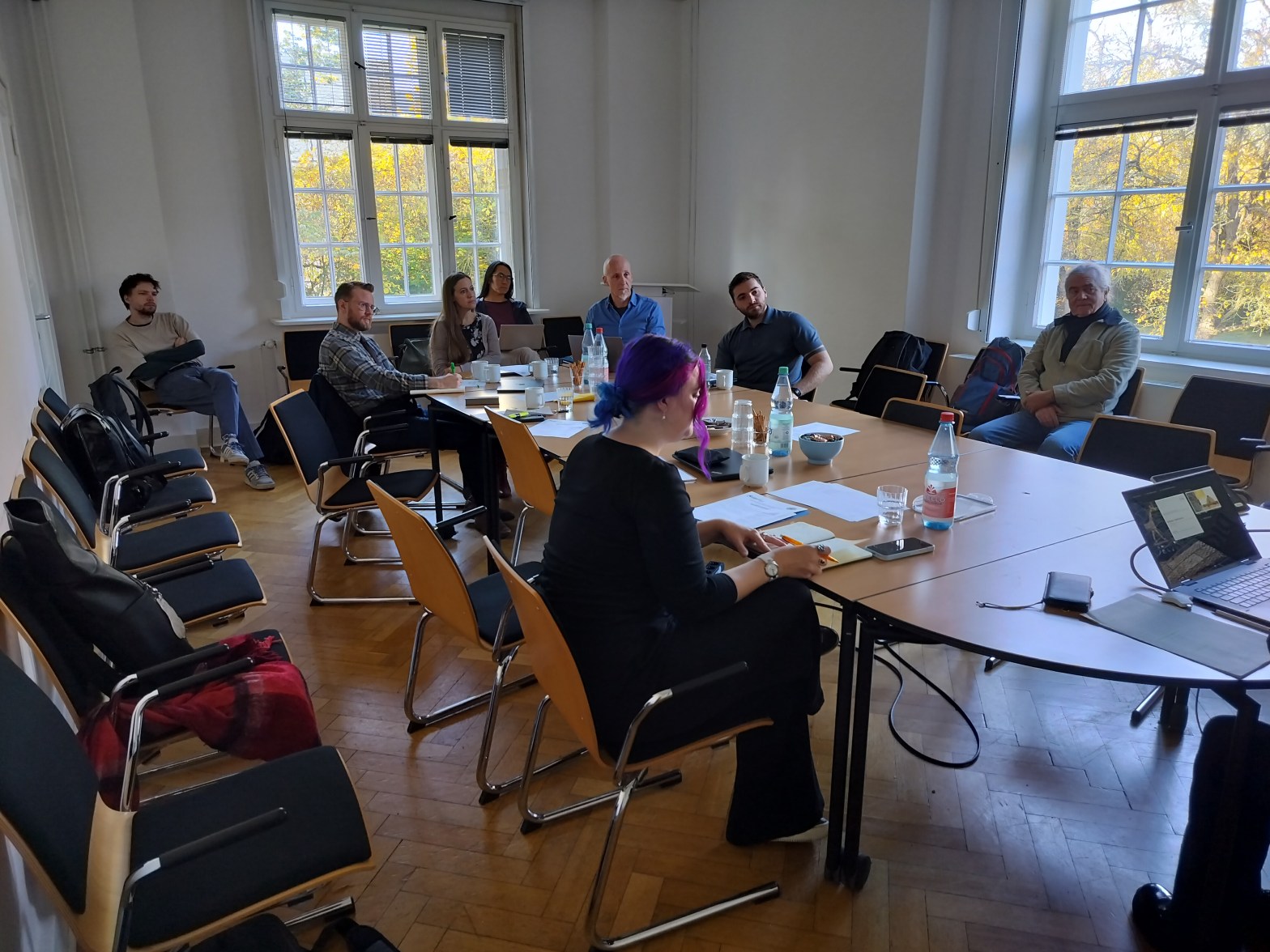
On 29th and 30th October 2026, Valery Schlegel and Dr. Ellie Bennett organised a two day workshop focused on discussing the digitisation of ancient West Asia visual and material culture at the Freie Universität Berlin.
The workshop’s goal was to gain insight from other projects like KISHIB, and learn the best approach for a wider project called Digitising Assyrian Palace Reliefs (DAPaR). The lessons will be turned into a White Paper – a living document describing DAPaR’s approach for full transparency.
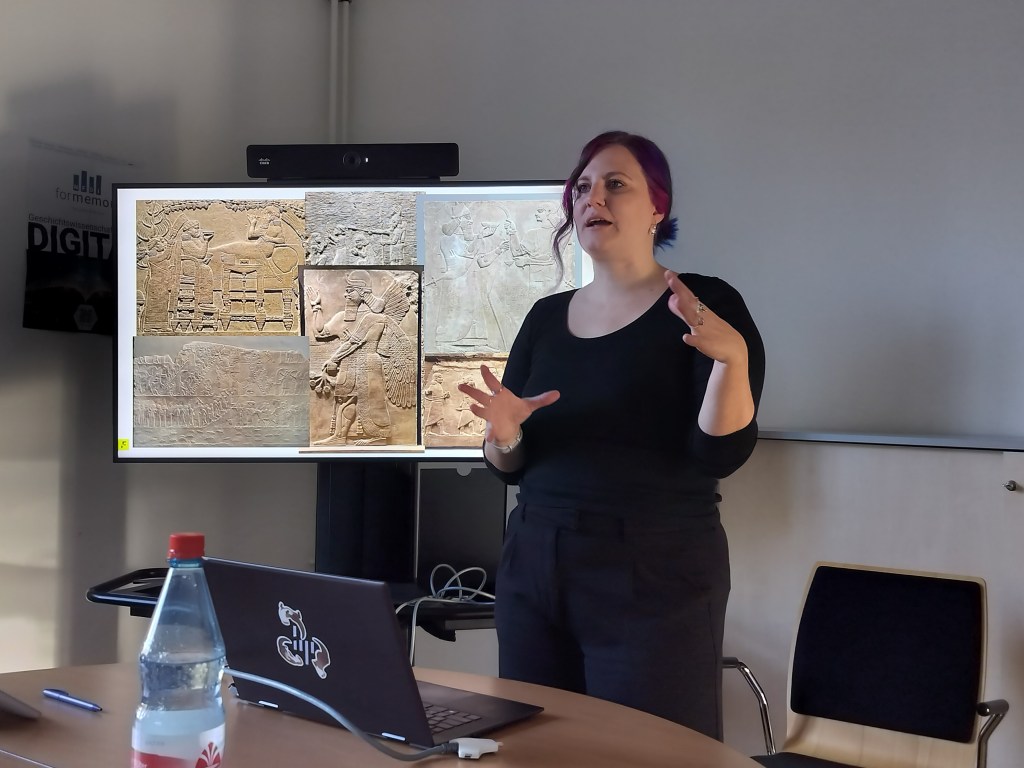
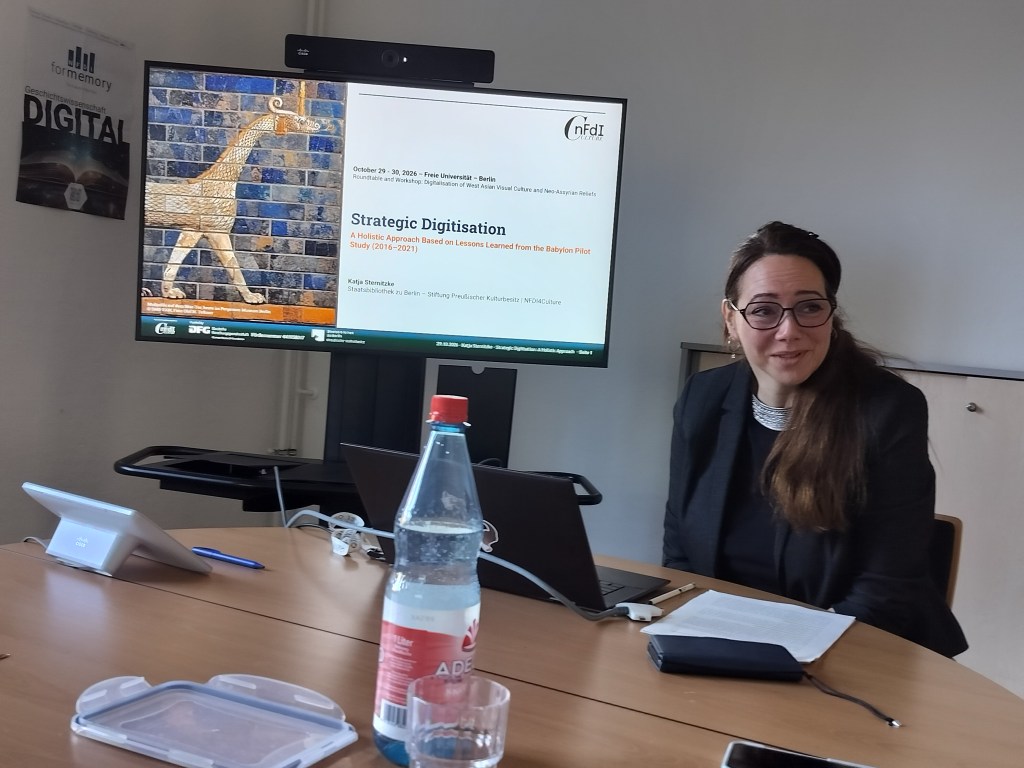
After an introduction from Valery Schlegel, Dr. Katja Sternitzke talked about the lessons learned from the Babylon Pilot Study (2016-2020). She stressed the importance of flexible project planning whilst also adhering to FAIR data principles. Throughout the two days she shared her insights as a member of the NFDI for Culture.
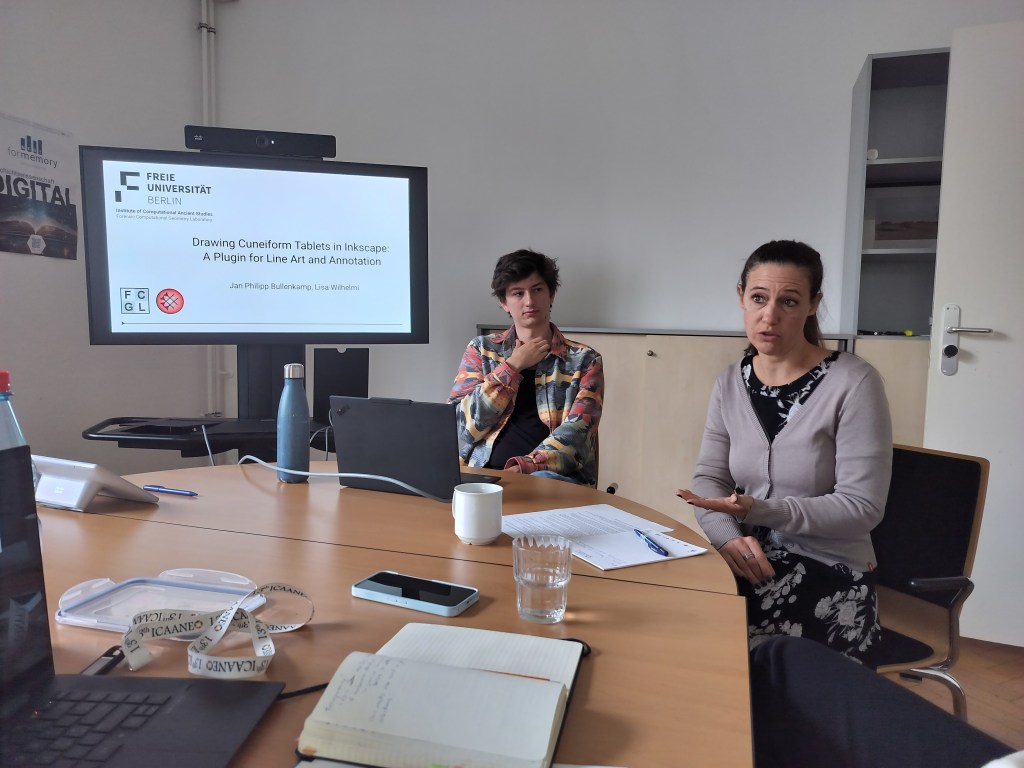
Dr. Lisa Wilhelmi and Jan Bullenkamp then introduced a new pipeline for making line drawings on tablets and computers. The plugin Jan created not only quickly makes cuneiform wedges, but allows the user to annotate them – future-proofing the line drawing for future computational uses like LLMs and NLP. The pipeline would be vital for incorporating the texts found on the Assyrian palace reliefs into a database.
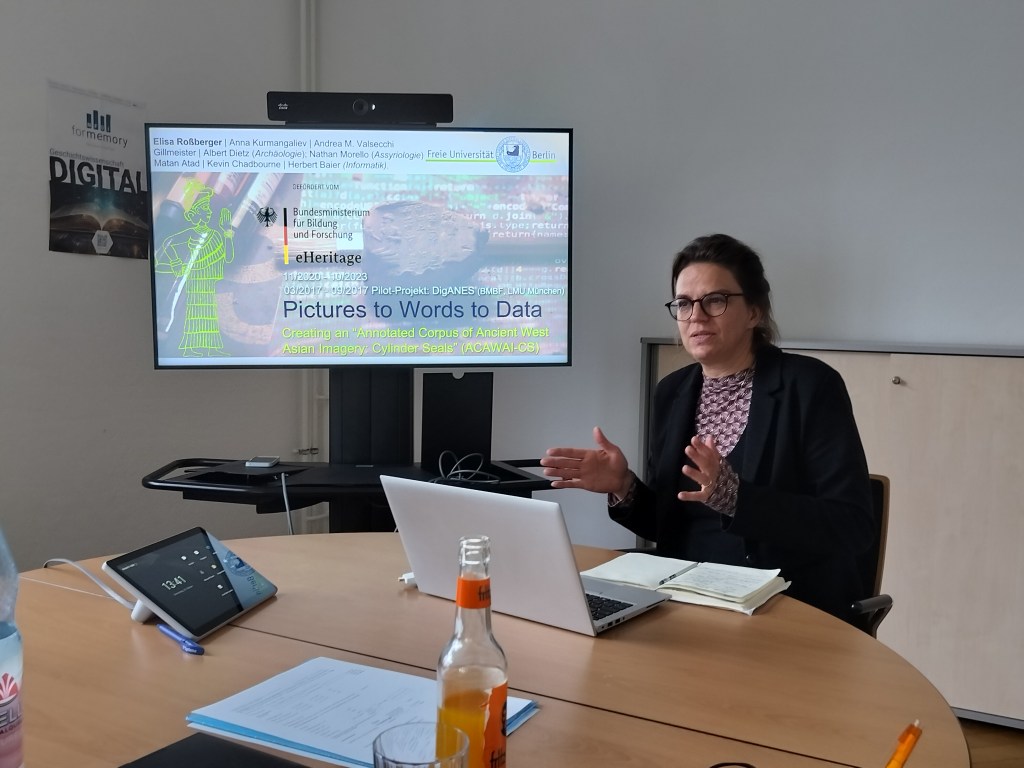
We heard then from the co-director of the KISHIB project Prof. Dr. Elisa Rossberger. She spoke about the importance of a robust annotation vocabulary and user-friendly interface for making the annotations. Her comments reminded us that UIs are not just for the public-facing end product, but for the internal project members as well.
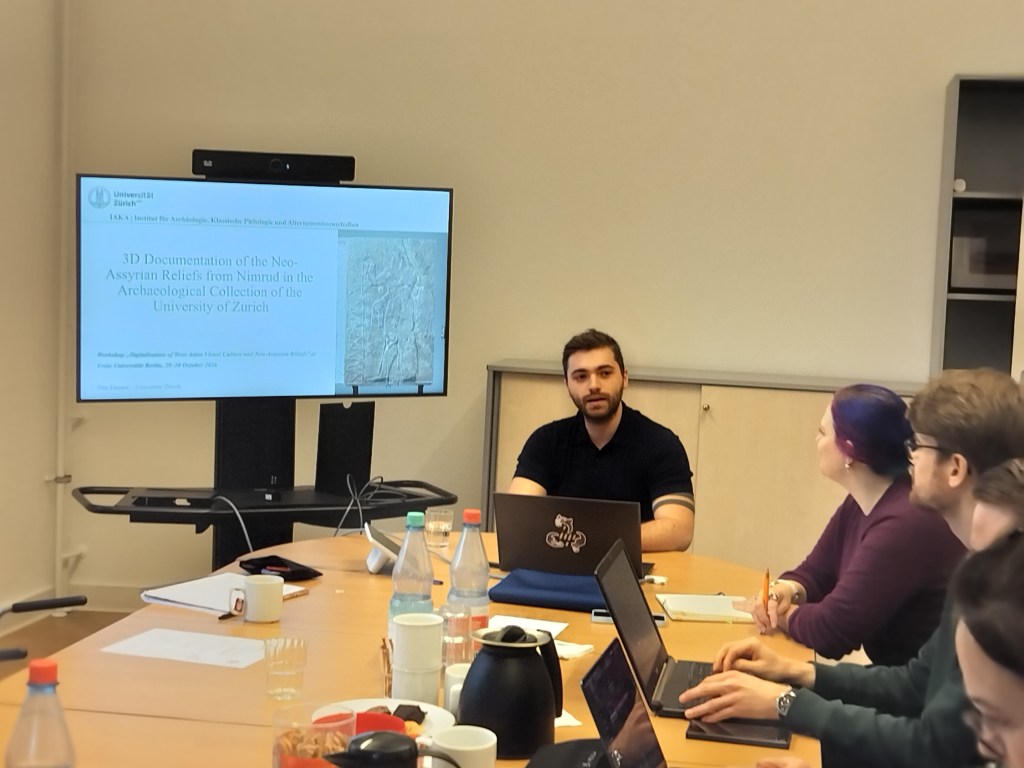
On day two Vito Ferrara began with an overview of how he created a 3D model of one of the slabs for the VABath project. He explained the setup, the size of the models, and demonstrated the 2D+ method of orthomosaics. The overview helped us gain concrete information regarding storage needed, as well as the logistical hurdles of scanning the reliefs.
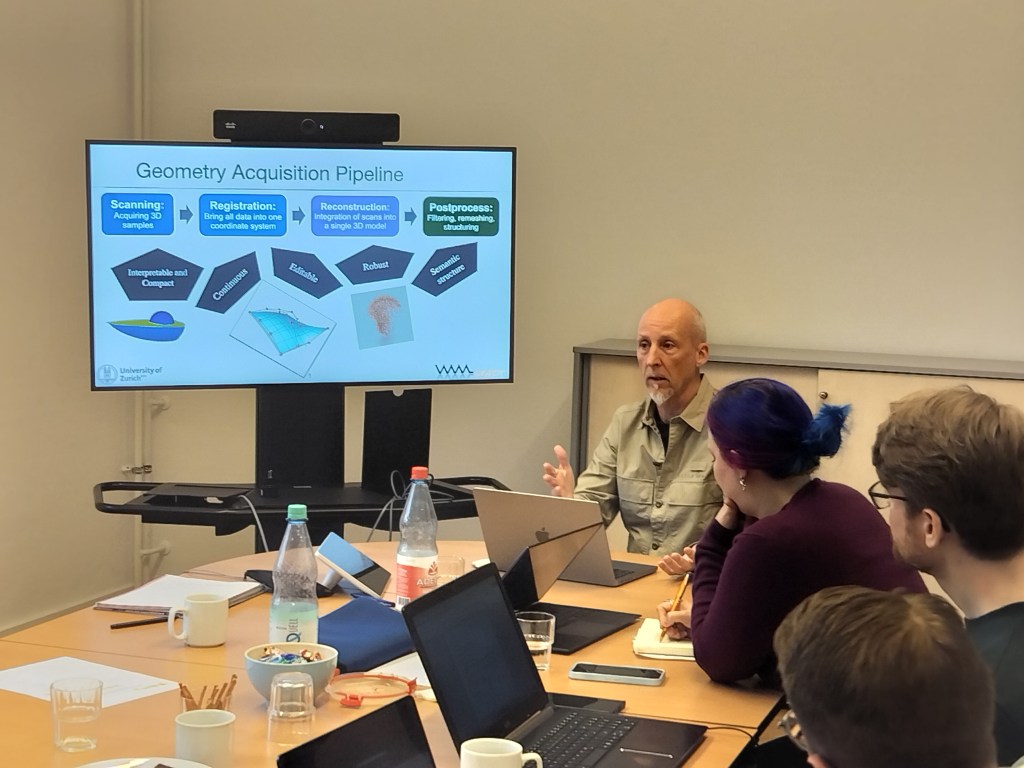
Renato Pajarola then explained a new method he and his team have developed for creating 3D models of building which automatically identifies rooms, as well as a system for 3D models to accurately model sharp edges on objects. The project helped us consider the difference between isometric 3D models and cloud point models and their different usages.
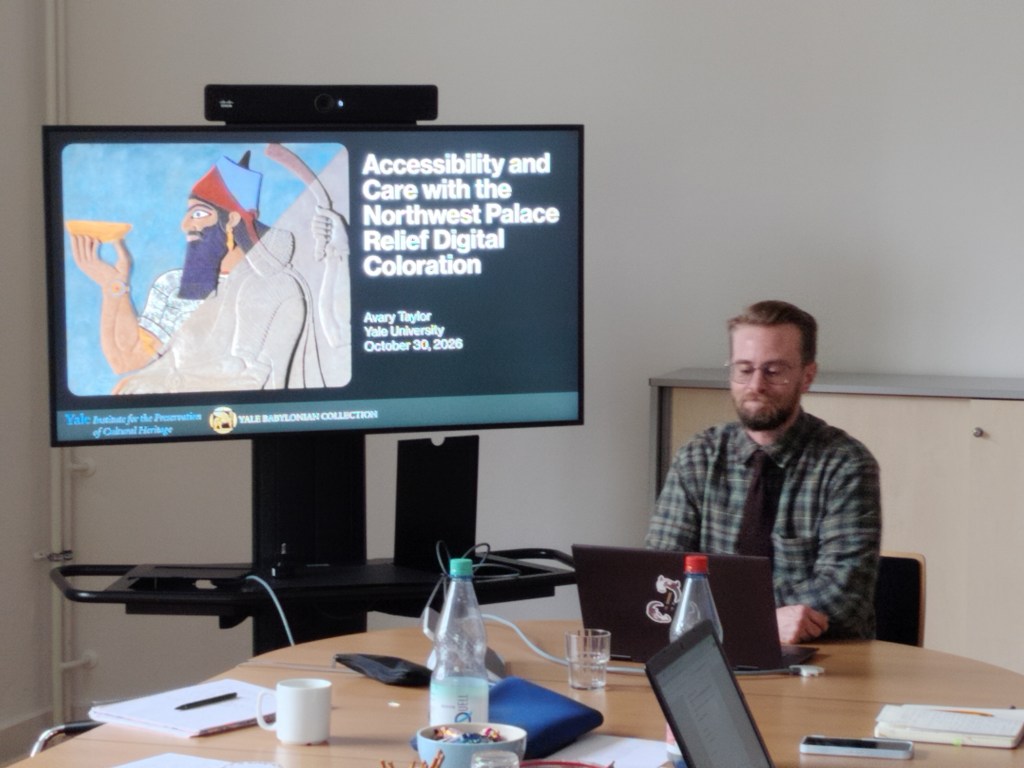
Finally, Avary Taylor presented his recent work documenting microscopic paint fragments on Assyrian palace reliefs in American heritage institutions. These findings are important reminders that the palace reliefs were painted, and raise questions regarding how to represent them in 3D models of Assyrian palaces.
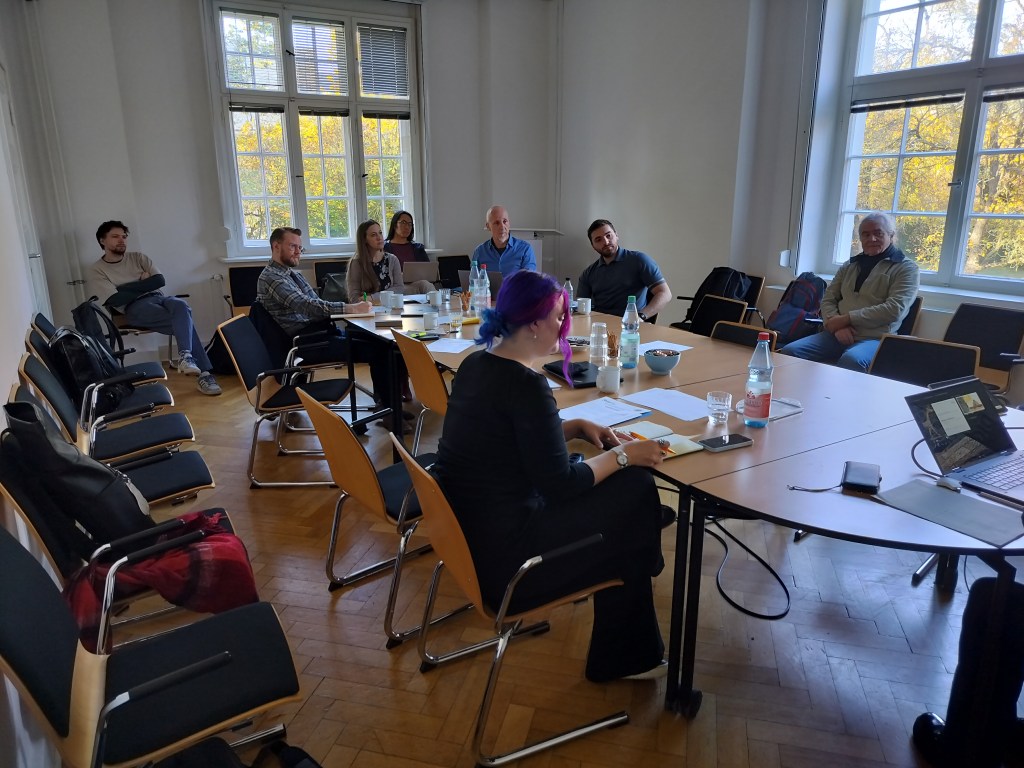
Most of the afternoons of both days had lively discussions about the presentations and what the ambitious DAPaR project could be. Suggestions ranged from very concrete ideas for data management plans all the way through to what a database of palace reliefs could do for future cultural heritage projects. It is clear that there is a need for DAPaR, and we were left with solid ideas for next steps. In the coming weeks, we will be able to transform these discussions and ideas into a White Paper detailing how we intend to proceed with this project idea.
Finally, we thank Una Europa for facilitating this event with its Early Career Workshops funding.

